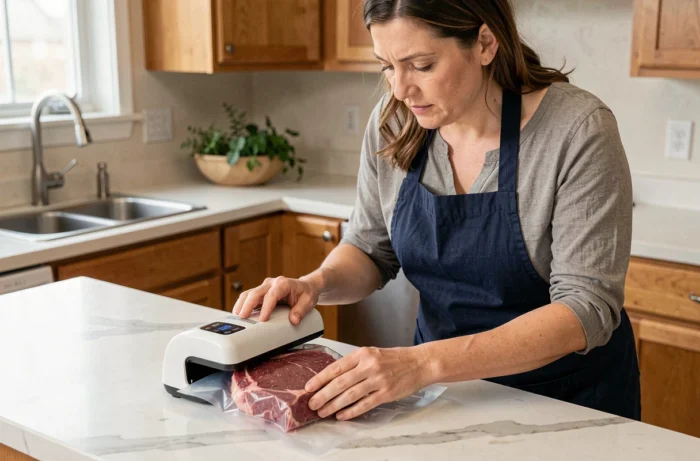
Vacuum-packed meat is gaining ground in home kitchens, but the shelf lives advertised here and there vary widely. What really determines how long vacuum-sealed meat lasts: the type of machine, the refrigerator temperature, or the nature of the room? This article lays out the factual benchmarks to compare methods and avoid preservation mistakes.
Clostridium botulinum and vacuum-packed meat: the risk that vacuum does not eliminate
Removing oxygen from a bag slows down oxidation and inhibits some of the aerobic bacterial flora. This mechanism is often summarized by the idea that vacuum sealing “protects” the meat. The bacteriological reality is more nuanced.
The vacuum promotes anaerobic bacteria, notably Clostridium botulinum, which thrives in low-oxygen environments. Vacuum sealing does not sterilize the meat and in no way replaces the cold chain. A vacuum-packed piece of beef stored at room temperature presents a higher microbiological risk than a piece simply wrapped in film in the refrigerator.
The official recommendations from the FSIS are more cautious than the durations frequently relayed. For raw meat vacuum-sealed at home, the guideline is to consume it within a few days or rely on the expiration date indicated by the manufacturer, rather than automatically applying durations of several weeks. Therefore, the preservation of vacuum-packed meat relies on an inseparable trio: bag airtightness, refrigerator temperature, and speed of consumption.
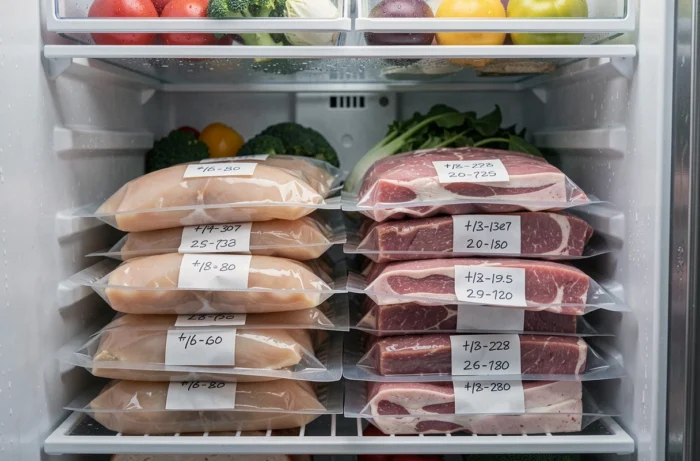
Vacuum preservation durations: refrigerator vs. freezer
The differences in duration between refrigeration and freezing are considerable. The table below summarizes the benchmarks from the professional and institutional sources consulted.
| Type of meat | Vacuum in refrigerator | Vacuum in freezer |
|---|---|---|
| Raw red meat (beef, lamb) | Several days (according to manufacturer’s expiration date) | Several months |
| Raw poultry | Several days | Several months |
| Cooked meat (rapidly cooled) | Several days after cooling | Several months |
| Sliced deli meats | Slightly longer than in conventional packaging | Variable depending on the product |
The common point: freezing remains the only method that truly extends preservation over several months. In the refrigerator, vacuum sealing provides a modest gain compared to conventional packaging, provided the temperature remains stable and low.
Refrigerator temperature: the often underestimated factor
A refrigerator set above the recommended zone drastically reduces the benefits of vacuum sealing. The coldest area of the refrigerator (often the bottom) is where vacuum-sealed meat bags should always be placed.
A difference of a few degrees can halve the shelf life. Checking the actual temperature with an independent thermometer is a rarely mentioned but crucial precaution.
Cooling after sous vide cooking: the danger zone
Sous vide cooking (low-temperature type) produces remarkable results in texture. The risk arises after cooking if the meat is not consumed immediately.
Cooked meat that cools slowly in its bag passes through a temperature range conducive to bacterial multiplication. In a low-oxygen packaging, this risk is amplified for anaerobic bacteria.
- Immerse the bag in an ice water bath immediately after cooking, without opening the packaging, to quickly lower the temperature
- Place the meat in the refrigerator as soon as the bag’s temperature has sufficiently dropped, without waiting for it to reach room temperature
- Never leave a bag of cooked meat to cool in the open air for more than an hour before refrigeration
This rapid cooling protocol is the weak link in most domestic practices. The preservation gain from vacuum sealing after cooking entirely depends on the rigor of this step.
Odor upon opening the bag: distinguishing the normal from the suspicious
Opening a vacuum-sealed meat bag sometimes releases a surprising, even unpleasant odor, prompting a precautionary disposal of the product. This reaction is often disproportionate.
A temporary odor, called confinement odor, can form in vacuum packaging and usually disappears after a few minutes of exposure to air. This phenomenon is related to the concentration of the meat’s natural aromas in a closed environment.
On the other hand, certain signals should raise alarms:
- A foul odor that persists after several minutes in the open air
- A slimy or sticky surface to the touch
- A swollen, punctured bag, or one whose airtightness is compromised
- Any visible leak or loss of vacuum in the bag indicates a breach of the protective barrier
The darker color of vacuum-packed meat is a reversible phenomenon related to the absence of oxygen. It returns to normal within an hour after opening. This color change is not an indicator of spoilage.
Chamber machine or external suction device: impact on vacuum quality
The type of device used directly influences the quality of the packaging and, by extension, the shelf life. External suction machines, the most common among consumers, suck air out through the opening of the bag. They leave a greater residual air pocket than chamber machines used in professional settings.
A poorly sealed bag or one containing residual air negates the benefits of vacuum sealing. Several precautions can improve results with a domestic device: use bags suitable for the machine, avoid folds on the sealing area, and portion the meat to reduce the volume of air to be extracted.
Protruding bones or the edges of certain cuts can puncture the bag during storage. Wrapping these areas with a piece of absorbent paper before vacuum sealing limits this risk without compromising suction.
Home vacuum preservation relies less on equipment than on strict adherence to the cold chain and cooling protocol. A perfectly sealed bag in a refrigerator that is too warm protects less than simple plastic wrap in a well-regulated device.