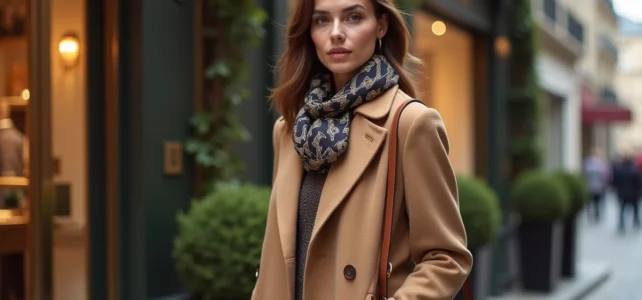
The Louis Vuitton dress code refers to the set of tacit and explicit rules that govern appearance within the house, whether it concerns store employees, visitors, or those who wish to wear the brand daily. These codes go beyond the simple question of the logo: they touch on colors, materials, proportions, and even the accessories allowed on the wrist.
Color Palette and Materials Allowed at Louis Vuitton
The foundation of the Louis Vuitton wardrobe is based on a range of neutral and muted tones. Black, navy, anthracite gray, off-white, and chocolate (the signature color of the Monogram canvas) form the base. Bright colors are not absent, but their use follows specific rules: they appear in touches, never as a solid block on a silhouette.
In terms of materials, the house favors smooth leather, epi leather (recognizable by its parallel stripes), Monogram coated canvas, and structured woolens. A wrinkled garment or one made from overly casual fabric, such as fine jersey or very soft linen, immediately stands out in the LV universe.
To delve deeper into these principles applied to the professional context, the style advice from LV advisors on Atypik Beauté details the specific expectations in-store and during job interviews.
Louis Vuitton Monogram: How to Wear It Without Overdoing It
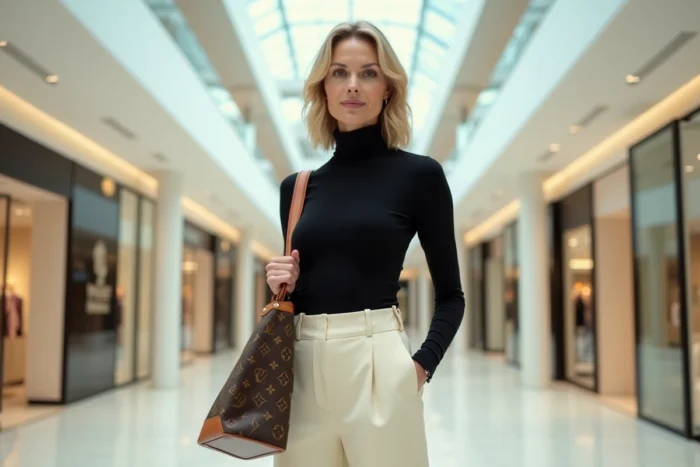
The Monogram canvas is the most recognizable sign of the house. Georges Vuitton created it in 1896 to replace the Damier canvas, which was deemed too easy to copy. The LV initials surrounded by flowers and diamonds have since formed a visual vocabulary that appears on almost all supports: bags, shoes, clothing, tech accessories.
The Monogram works best as a single piece per outfit. A Speedy bag in Monogram canvas worn with a sober, solid outfit creates a controlled contrast. Multiplying logoed pieces on the same silhouette produces the opposite effect of what is sought: instead of signaling belonging to the LV code, it suggests a lack of understanding of the house’s rules.
Monogram Pieces to Favor
- A structured bag (Speedy, Noé, or Keepall in a small size) worn with straight trousers and a solid top
- A Monogram canvas belt, visible only when the jacket is opened, for a detail effect rather than display
- A clutch or document holder for professional contexts, where a classic handbag may seem too informal
Structured Silhouette: The Cut That Defines Louis Vuitton Style
Louis Vuitton is a trunk maker before being a fashion house. This origin explains an obsession with structure and clean lines. LV clothing is rarely fluid or draped: they hold, they shape, they frame the body.
Adopting this principle without buying a complete wardrobe at LV means favoring jackets with pronounced shoulders, pleated trousers, and thick poplin shirts. The fall of the garment matters as much as the brand printed on it.
A well-cut blazer with pleated trousers better reflects the LV spirit than a logoed t-shirt worn with faded jeans. The house values the construction of the garment, not just its label.
Accessories and Details to Watch
In Louis Vuitton stores, sales advisors wear discreet watches, never visible sports chronographs or smartwatches. This detail encapsulates the philosophy: every visible element must fit into an overall coherence.
Shoes follow the same logic. Derby shoes, loafers, or smooth leather ankle boots pass without issue. Sneakers are tolerated only if they come from LV collections and remain in muted colors. A pair of generic white sneakers, even clean and of good quality, can provoke a remark in a professional context related to the house.
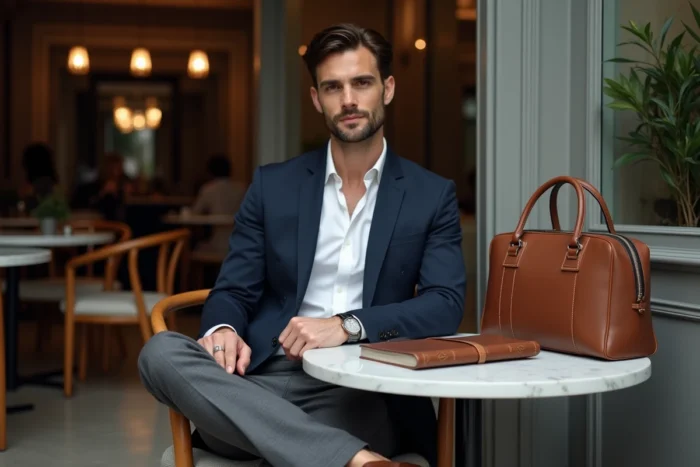
Surf and Dandy Aesthetic at Louis Vuitton Men: The Pharrell Williams Shift
Since Pharrell Williams took the helm of men’s style, the Louis Vuitton men’s wardrobe has integrated an unexpected vocabulary. The Spring-Summer 2027 collection, presented as an ode to surf culture, blends Monogram-branded wetsuits with contemporary dandy silhouettes reinterpreted with beach codes.
This shift does not contradict the fundamentals of the house. It stretches them. The structure remains present in the cuts, the materials retain their density, but the visual references expand towards the ocean, the reef, the wave as a symbol of movement.
To integrate this aesthetic into a personal wardrobe, a few principles emerge:
- Precisely tailored bermuda shorts replace shapeless shorts, provided they are worn with a structured high piece
- Aquatic prints or sand and turquoise tones work in small doses, on an accessory or a single piece of the look
- Layering remains possible even in summer: an open shirt over a fitted t-shirt replicates the layering logic dear to the house
The surfer dandy according to LV is not casual; he is precise in his relaxation. The difference lies in the choice of proportions and the quality of finishes.
Adapting the Louis Vuitton Code to a Realistic Budget
Reproducing the spirit of the LV dress code does not mean only buying Louis Vuitton. The house itself, through its fashion shows and campaigns, exposes transposable principles: a restricted palette, architectured cuts, counted accessories.
A wardrobe built around five to seven neutral and well-cut pieces, complemented by a single identifiable LV accessory, conveys more of the house’s spirit than an accumulation of mismatched logoed pieces. The LV code is based on restraint, not accumulation.
Epi leather, for example, can be found on the second-hand market at more accessible prices than Monogram canvas, while being more discreet and often better perceived in a professional context. It is a relevant entry point for those wishing to integrate an authentic piece without compromising the coherence of their silhouette.