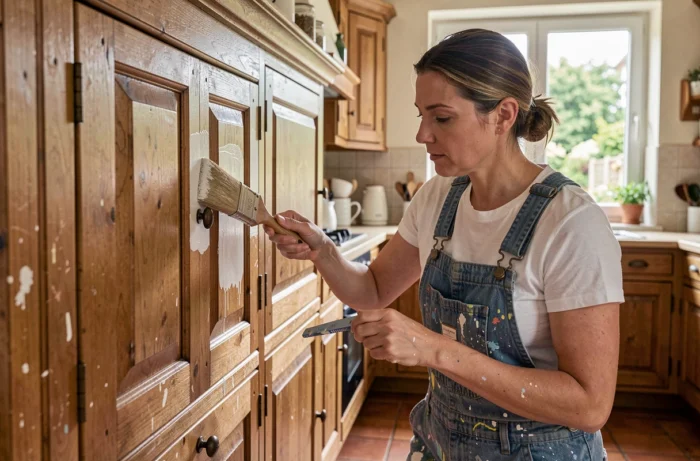
Repainting a laminate kitchen cabinet, bathroom tiles or a varnished wooden staircase: V33’s Rénovation Perfection range promises to cover these surfaces without a primer or extensive sanding. Does it hold up over time, and how does performance vary from one surface to another? The available technical data helps show what this renovation paint actually changes compared with replacing the surface or using conventional paint.
Compatible surfaces and limitations: what V33 Rénovation Perfection really covers
The range includes several specialist products (Cuisine et Bain, Sol et Escalier, Faïence et Lambris). Each is designed for different materials and has its own drying times and application requirements, and may require different complementary products.
| Product | Intended surfaces | Primer | Recommended coats | Specific requirement |
|---|---|---|---|---|
| Rénovation Perfection Cuisine et Bain | Melamine, laminate, varnished wood, wall tiles | No (apply directly) | 2 | Protective varnish recommended for worktops |
| Rénovation Perfection Sol et Escalier | Floor tiles, polished concrete, sealed parquet | No | 2 | Mechanical resistance develops over several days, not during drying |
| Rénovation Perfection Faïence et Lambris | Wall tiles, PVC or wooden panelling | No | 2 | Light abrasion recommended on very smooth surfaces |
The table highlights something that the range’s general marketing tends to gloss over: the paint does not reach its full resistance as soon as it is touch-dry. On a worktop or floor, putting the surface back into use too soon can compromise the paint film’s durability. An additional protective varnish is even recommended for heavily used horizontal kitchen surfaces.
Choosing a V33 renovation paint suited to the surface helps you avoid discovering these limitations halfway through the project. The technical data sheets for each product specify the full curing times, which are considerably longer than the basic drying time.
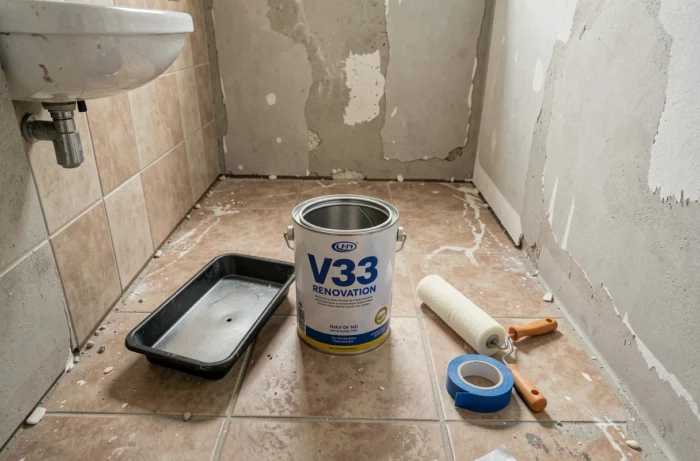
V33 renovation paint versus replacement: where the real savings lie
The main argument for renovation paint is cost: repainting a kitchen cabinet costs a fraction of replacing the doors and drawer fronts. The time savings also seem obvious, since there is no need to remove the old fronts, order custom replacements or reinstall them.
This reasoning holds only if the surface is structurally sound. A melamine panel swollen by moisture, cracked tiles or rotten wood cannot be fixed with two coats of paint, however good its adhesion may be.
How durable is it on different surfaces?
On a vertical kitchen cabinet surface (a door or cabinet front), mechanical wear is relatively light. The paint can last for several years without visible deterioration, provided you apply both coats and allow the paint to cure fully.
On tiled floors or stairs, the picture changes. Repeated foot traffic, shoes and moving furniture create abrasion that the paint film withstands less effectively than tiles or solid wood flooring. A painted floor requires more careful maintenance than an original floor.
For bathroom wall tiles, water resistance is the key factor. The manufacturer describes the Rénovation Perfection range as perfectly waterproof. In practice, the grout remains a weak point: if the silicone sealant is damaged, it must be replaced before painting, adding a step that is often underestimated.
Indoor air emissions: check the product label, not the range’s claims
V33 says it has recently updated its formulations to make them more environmentally friendly. This claim should be checked for each individual product.
In France, paints intended for indoor use must display an indoor air emissions rating from A+ to C, under the decree of 19 April 2011. This classification measures the volatile organic compounds (VOCs) emitted after application.
Two products in the same V33 range may have different ratings depending on their formulation. Assuming a product’s emissions rating based on general brand messaging can lead to mistakes. Before buying, check:
- The emissions rating (A+, A, B or C) printed on the tin or product data sheet, not just on the brand’s general marketing website
- The VOC content in g/L, which varies depending on the base (water-based or solvent-based) and the colour chosen
- Whether the product is suitable for the room’s ventilation during and after application (some products require prolonged ventilation)
Comparing the actual labels on two tins is better than relying on claims about the range as a whole.

Surface preparation: differences that affect the result
“No primer” does not mean “no preparation”. The process varies considerably depending on the material, and this is often where renovation projects go wrong.
- On melamine or laminate: degreasing is generally enough. The product’s specialist formulation allows it to adhere directly
- On varnished or painted wood: light sanding with fine-grit sandpaper improves adhesion, even if the manufacturer does not always make it a requirement
- On tiles: cleaning must remove all traces of soap, limescale and silicone. Damaged silicone sealant should be removed and replaced after painting, not before
- On PVC panelling: thorough degreasing is essential because PVC is naturally non-porous
Depending on the surface’s initial condition, preparation can double the total project time. A clean, well-maintained kitchen cabinet can be repainted over a weekend. A grimy bathroom tiled surface with silicone sealant that needs replacing can take several days of work spread over one to two weeks, including drying time.
V33 renovation paint can indeed transform surfaces without replacing them, provided you set realistic expectations for the surface in question. A vertical cabinet that sees little wear offers the best balance between effort and lasting results. A floor or worktop requires more care and may need an additional finishing product. Carefully reading the technical data sheet for the exact product—not just the range—is the best investment before opening the tin.