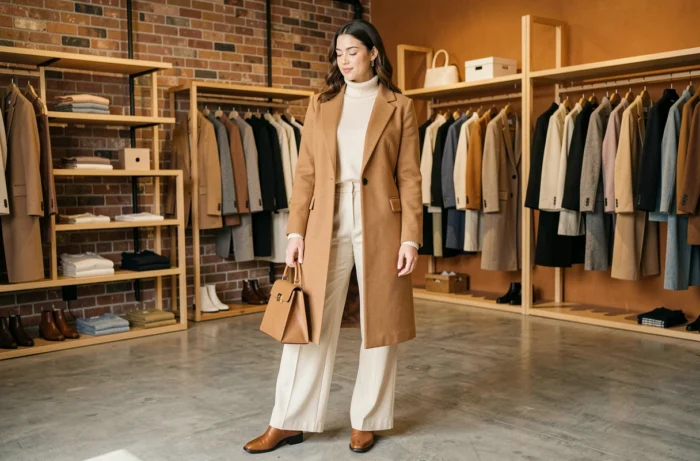
A fashion trend is not an isolated garment that appears on a runway. It is a signal shared by several houses, picked up in commercial collections, and then adopted on a large scale. The autumn-winter 2026 season is distinguished by a European regulatory context that concretely modifies the in-store offer, and by stylistic directions that prioritize the longevity of pieces.
ESPR Regulation and the end of unsold destruction: what changes in the aisles
Since July 19, 2026, the ESPR regulation (Ecodesign for Sustainable Products Regulation) prohibits large companies from destroying unsold new clothing and shoes in the European Union. Brands must also publicly declare the volumes of destroyed products on their website and in their sustainability reports.
This regulatory constraint has a direct effect on what customers find in stores. Retailers are multiplying private sales, “archive” capsules, and collaborations around dormant stocks. Pieces from previous seasons are reappearing in new packaging, at reduced prices.
To follow fashion trends on Beauté en Folie, it helps to identify which pieces from these circuits are worth buying. The reflex to adopt: check if a discounted or “archive” garment corresponds to a cut still worn this season, rather than buying out of promotional reflex.
Another consequence of the regulation: generic environmental claims become illegal as of September 27, 2026. Terms like “eco-friendly,” “green,” or “climate neutral” without certified proof will disappear from labels. When a brand claims an ecological commitment on a garment, it must now document it.
Colors and materials trending for autumn-winter 2026
The palettes of the season move away from the neutral tones that dominated in recent years. Bordeaux, lime green, and sky blue are among the most featured shades in autumn-winter collections, including those from mainstream brands.
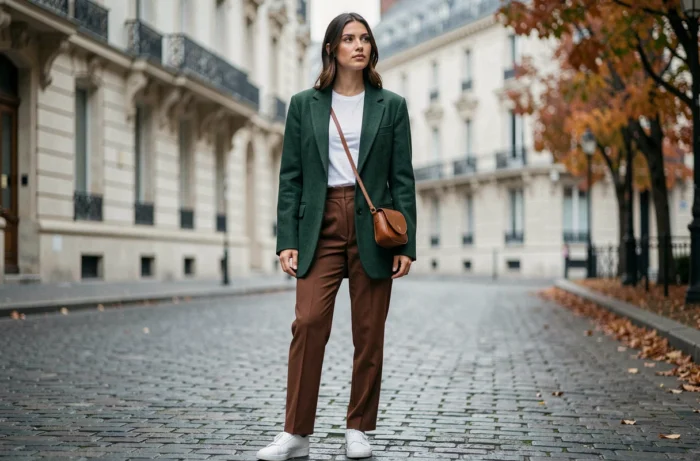
Bright colors are not worn in total looks. The most reliable style rule remains to pair a strong colored piece (a bordeaux coat, a lime green sweater) with neutral basics: raw denim, black pants, off-white. The contrast creates the effect without tipping into a costume.
Materials to favor for durability
The regulatory context pushes brands towards more traceable materials. Blended wools, thick cottons, and ribbed knits dominate the autumn-winter offerings. Cheap synthetic materials are declining in the collections of brands subject to the ESPR regulation.
- Ribbed knits in wool or cotton offer better durability in washing than fine knits and can last through several seasons without visible deformation
- Thick cotton fabrics (like chino or gabardine) are gradually replacing fine polyesters for structured pants
- Textured leathers and faux leathers remain present on jackets and accessories, with increasing traceability demands from distributors
Oversized cuts and menswear: decoding the season’s silhouette
Oversized remains the dominant cut, but its use is evolving. Loose jackets with masculine inspiration, deconstructed blazers, and roomy coats form the foundation of the autumn-winter 2026 wardrobe. Menswear is making its way into women’s collections in a more assertive form than just borrowing.
High-waisted straight-leg pants become the pivot of the silhouette. Worn with an oversized jacket, it creates a balance between upper volume and lower structure. This is the opposite of the skinny-oversized trend that prevailed a few seasons ago.
Pieces with high rotation potential
Three categories of clothing concentrate the best ratio between current trend and longevity in the wardrobe:
- The thick denim jacket, worn open over a turtleneck or closed like a shacket, works from September to April
- The “second skin” sweater with a high collar, in fine knit, serves as a base for almost all layering this season
- The long dress in fluid material, paired with ankle boots and a structured coat, transitions from the office to an outing without a change of outfit
Building an autumn-winter 2026 look without renewing your entire wardrobe
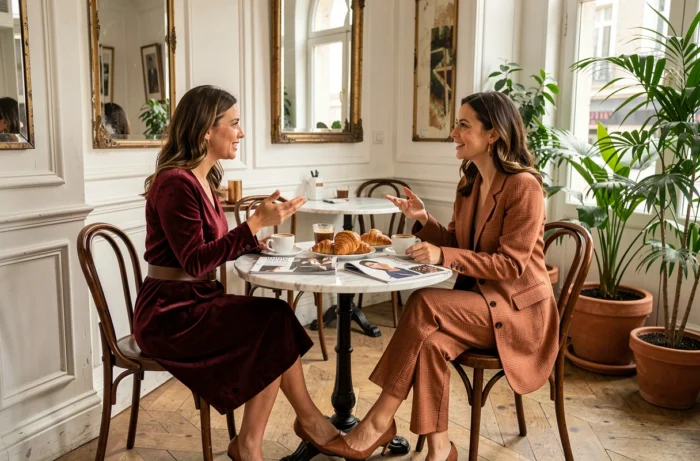
The most underestimated trend of the season is not a piece, it is a method. With the multiplication of “archive” capsules and repositioned end-of-line items, style relies more on assembly than on new purchases.
An oversized coat bought two seasons ago remains relevant if worn with current high-waisted pants and updated accessories. Cut-out ballet flats or practical bags with short shoulder straps are enough to anchor a silhouette in the season without replacing the essentials.
White jeans, long confined to summer, are making their way into fall looks when paired with dark pieces and heavy materials. It is a strong style signal that costs only one piece.
The most effective approach for this season is to identify two or three pieces from your wardrobe that still match current cuts, then complete them with a single targeted purchase: a strong color, a cut you do not own, or an accessory that alters the silhouette’s reading. Buying less but assembling better summarizes the direction of autumn-winter 2026 fashion.