
Your skin feels tight after cleansing, or it shines by midday despite applying cream in the morning. These signals often indicate a mismatch between the products used and the actual needs of the skin. An effective skincare routine relies less on the number of layered facial treatments and more on the selection of a few suitable steps, in the right order, with proven active ingredients.
Reformulated sunscreens: what changes concretely in your facial care
The European regulation has banned the marketing of the UV filter 4-MBC (4-Methylbenzylidene Camphor) since May 1, 2025, with a total ban on availability planned for May 1, 2026 (Regulation (EU) 2024/996). This filter was present in many SPF facial creams and tinted bases sold in supermarkets.
Direct consequence: brands are reformulating their sun protection products. The new textures favor mineral or hybrid filters, often lighter and less likely to leave a white film. If your usual sunscreen has changed its formula or disappeared from the shelves, it is probably related to this compliance.
At the same time, restrictions on PFAS in cosmetics are gradually reducing the presence of fluorinated polymers in long-lasting foundations and waterproof products. These compounds ensured durability and water resistance. Their removal is pushing laboratories to develop alternatives based on plant waxes or modified silicones. Before repurchasing your sun products, check that the new formula is still suitable for your skin type.
Specialized retailers like Kosmetic allow you to compare compositions and identify reformulated products tailored to each need.
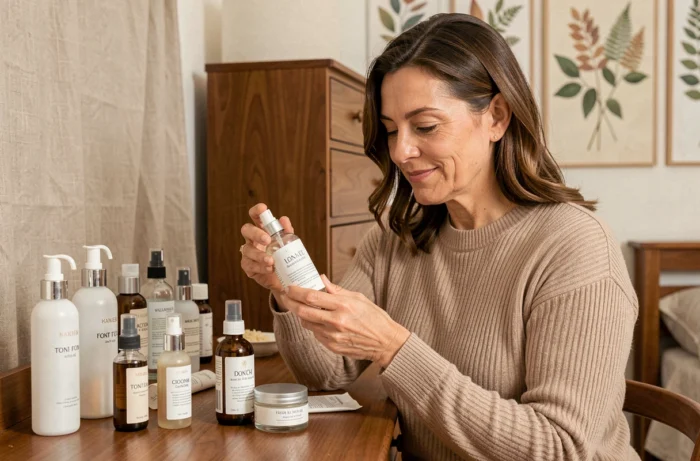
Morning skincare routine: three steps are enough for most skin types
Have you noticed that some mornings your skin seems more receptive to treatments than others? The reason often lies in a forgotten step: gentle cleansing before any application.
Gentle cleansing upon waking
At night, the skin produces sebum and accumulates cellular residues. A simple rinse with water is not enough. Use a gentle facial cleanser (milk, sulfate-free gel, micellar water). Cleansing prepares the skin to absorb the following active ingredients.
Targeted serum before cream
The serum contains concentrated actives in a fluid texture. Applied to clean, slightly damp skin, it penetrates better than a thick cream. Choose it according to your main concern:
- Hyaluronic acid for hydrating dehydrated or tight skin
- Vitamin C (stabilized ascorbic acid) to revive radiance and protect against oxidative stress
- Niacinamide to regulate sebum and reduce enlarged pores on combination to oily skin
A single well-chosen serum often replaces two or three layered products. This is the principle of skinimalism: reducing the number of treatments to better target.
Moisturizer and sun protection
Finish with a cream suitable for your skin type, followed by an SPF. If you find this double layer too thick, opt for a moisturizer that includes a sun filter. Current hybrid formulas offer lightweight textures compatible with makeup.
Beauty trends to watch: the skin microbiome
The microbiome refers to the collection of microorganisms (bacteria, yeasts) that live on the surface of the skin. Each person has a unique microbiome, influenced by diet, environment, and the cosmetic products used.
Why is this topic emerging in beauty trends? Because overly aggressive cleansers or ten-step routines can deplete this skin flora. An unbalanced microbiome promotes redness, dryness, and imperfections.
Products formulated with prebiotics or postbiotics aim to nourish these beneficial microorganisms rather than eliminate them. Specifically, this translates into cleansers with a pH close to that of the skin (around 5.5) and creams containing ferments.

This is not a passing cosmetic trend. The market for microbiome-focused products is experiencing significant growth, driven by dermatological research confirming the link between skin bacterial diversity and skin health.
Evening routine: the time when actives really work
At night, the skin enters a repair phase. Body temperature slightly increases, blood circulation intensifies, and skin permeability increases. This is the ideal time to apply powerful actives.
Double cleansing in the evening is useful if you wear makeup or a resistant SPF. Start with an oily cleanser (cleansing oil, balm) that dissolves sunscreen and makeup. Follow up with a water-based cleanser to remove residues.
After cleansing, apply your treatment actives. Alternatives to retinol are gaining traction for sensitive skin:
- Bakuchiol, a plant extract with effects comparable to retinol but better tolerated by reactive skin
- Collagen peptides, which stimulate natural collagen production without causing peeling
- Azelaic acid, effective on imperfections and pigmentation spots while being compatible with sensitive skin
Finish with a night mask or a rich cream. Consistency matters more than the quantity of products applied. Two well-chosen treatments used every evening produce visible results in a few weeks.
Beauty trends may come and go, but the fundamentals of a skincare routine remain stable: cleanse without aggression, target one or two actives suitable for your skin, protect in the morning, repair in the evening. It’s better to have three mastered products than a shelf full of bottles used randomly.