
Calliphoridae (Calliphora, Lucilia, Sarcophaga) detect exposed meat within minutes thanks to their chemosensory receptors. Egg-laying on a piece of raw or cooked meat left in the open air can occur in less time than it takes to prepare a meal. Preventing and eliminating fly eggs on meat requires understanding the biology of egg-laying, mastering storage conditions, and knowing when contaminated food should be discarded.
Bacterial load associated with fly eggs on meat
The presence of eggs is not just an aesthetic issue. Flies deposit pathogenic bacteria at the same time as their eggs, which results in double contamination: parasitic and microbiological.
There is often confusion between dry and wet foods in relation to this risk. On a dry product (grains, legumes), freezing for 48 hours may be sufficient to kill eggs and larvae, and the product remains consumable after sorting. This logic does not hold for meat. The moist, protein-rich substrate promotes rapid bacterial proliferation as soon as it comes into contact with the fly’s legs and ovipositor.
Food safety experts apply a nearly zero tolerance for raw or cold meat exposed to flies. Cold can neutralize eggs, but it does not destroy the microbial load already deposited on the surface. A piece of meat on which eggs have been laid does not become safe again after simple refrigeration or freezing.
To avoid fly eggs on meat, we recommend intervening upstream rather than trying to rectify an already established contamination.
Egg-laying window of Calliphoridae: temperature and intervention time
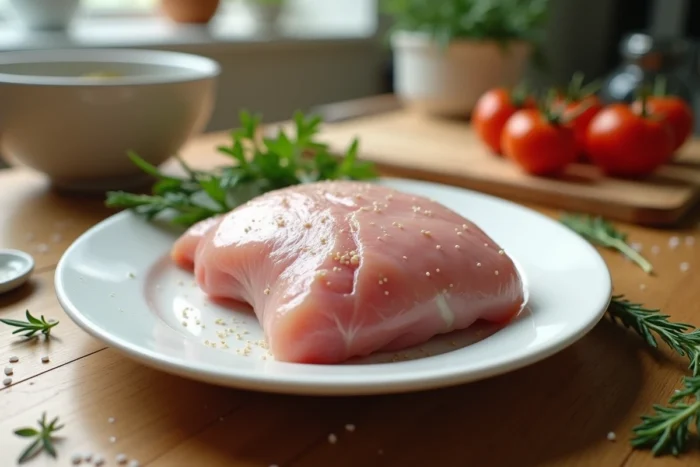
The speed of egg-laying directly depends on the ambient temperature. Above 22 °C, the maturation of oocytes in the female accelerates, and the search for a laying site becomes almost immediate after mating. In summer kitchens or during a barbecue, the window between the exposure of the meat and egg-laying shrinks to just a few minutes.
The incubation of eggs to the larval stage takes less than 24 hours under optimal heat and humidity conditions. This very short timeframe explains why a piece of meat forgotten on a countertop in the morning can have visible maggots by that evening.
The humidity factor plays a role as crucial as temperature. Marinated meat or a thawed piece that is oozing provides an ideal laying substrate. Conversely, dried or smoked meat attracts fewer Calliphoridae, as the surface moisture level is too low to ensure larval survival.
Practical thresholds for non-refrigerated storage
In a professional setting, the rule of two hours maximum at room temperature applies to all raw meat. In a domestic context (picnics, camping, summer kitchens), this timeframe should be shortened as soon as the temperature exceeds 30 °C.
- Below 15 °C, egg-laying is significantly slowed down, but not impossible: some species of Calliphora remain active at cool temperatures.
- Between 20 and 30 °C, egg-laying can occur within minutes if the meat is accessible. Physical protection (cloche, cling film, mosquito net) becomes the only reliable barrier.
- Above 35 °C, the complete egg-larva cycle compresses, and maggots can appear within half a day.
Physical barriers and management of laying areas in the kitchen
Chemical or natural repellents (cloves, vinegar, essential oils) only provide partial deterrence. Only a physical barrier truly prevents egg-laying on meat.
The fine mesh food cover remains the most reliable device for meat awaiting cooking or serving. Direct contact cling film also works, provided there are no gaps. Meat flies can lay eggs in an opening of just a few millimeters.
Managing attractive areas around the work surface
Flies do not only target meat. They are attracted to all organic matter decomposing in the nearby area. An open trash can or a cluttered sink increases the laying pressure on the entire preparation area.
- Empty the kitchen trash every evening during hot weather, even if it is not full. Residues of meat, fish, or fermented fruits attract adults within hours.
- Regularly clean sink traps and drains: wet organic deposits serve as secondary laying sites for several species of diptera.
- Store cutting waste (trimmings, bones, skin) in a closed bag placed directly in the refrigerator or freezer until collection day.
- Avoid leaving very ripe fruits in immediate proximity to the meat preparation area: they first attract fruit flies, but also Calliphoridae due to the concentration of odors.

Meat contaminated by fly eggs: when to throw away, when to salvage
The question often arises: can meat on which a fly has laid eggs still be consumed? The answer depends on the stage of contamination and the type of cooking planned.
If the eggs have just been laid (visible white clusters on the surface, no larvae yet), mechanical removal followed by thorough rinsing and then cooking to the core may be considered. We recommend this approach only for meat intended for long cooking at high temperatures (stew, braise), never for a piece served rare or medium-rare.
As soon as mobile larvae appear, the meat must be discarded without hesitation. The presence of maggots indicates that contamination has progressed for several hours, and the surface bacterial load is then too high to be neutralized by cooking alone.
For cooked meat left waiting (buffet, barbecue leftovers), the tolerance is even lower. Cooked meat that has cooled provides a favorable culture medium for bacteria carried by the fly. The slightest visible egg-laying justifies the elimination of the affected piece.
The most effective reflex remains prevention: systematically cover, reduce exposure time to the open air, and treat the kitchen as an area to be actively protected as temperatures rise. The fight against fly eggs on meat is won before laying, rarely after.